
 Image 1 of 19
 Image 2 of 19
 Image 3 of 19
 Image 4 of 19
 Image 5 of 19
 Image 6 of 19
 Image 7 of 19
 Image 8 of 19
 Image 9 of 19
 Image 10 of 19
 Image 11 of 19
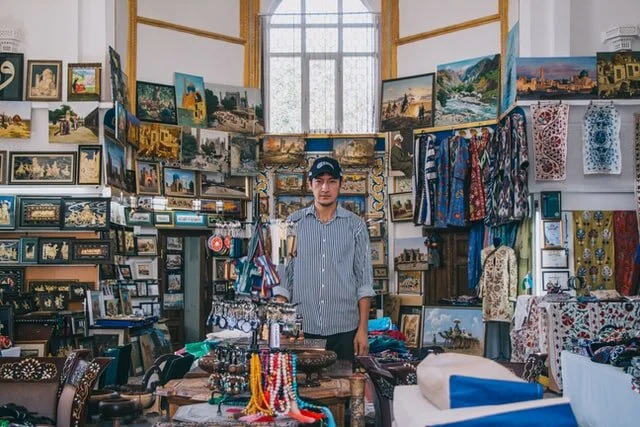 Image 12 of 19
 Image 13 of 19
 Image 14 of 19
 Image 15 of 19
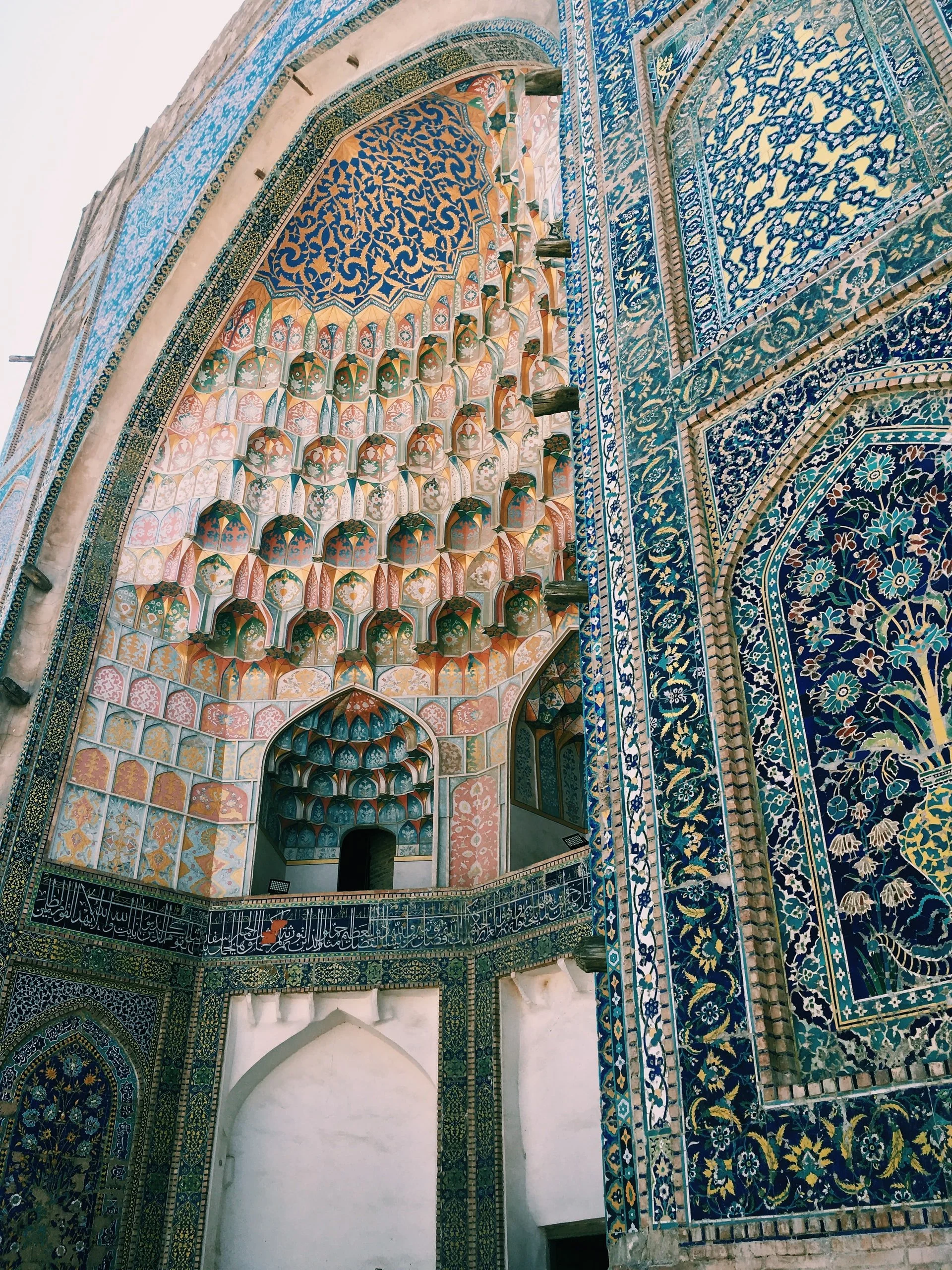 Image 16 of 19
 Image 17 of 19
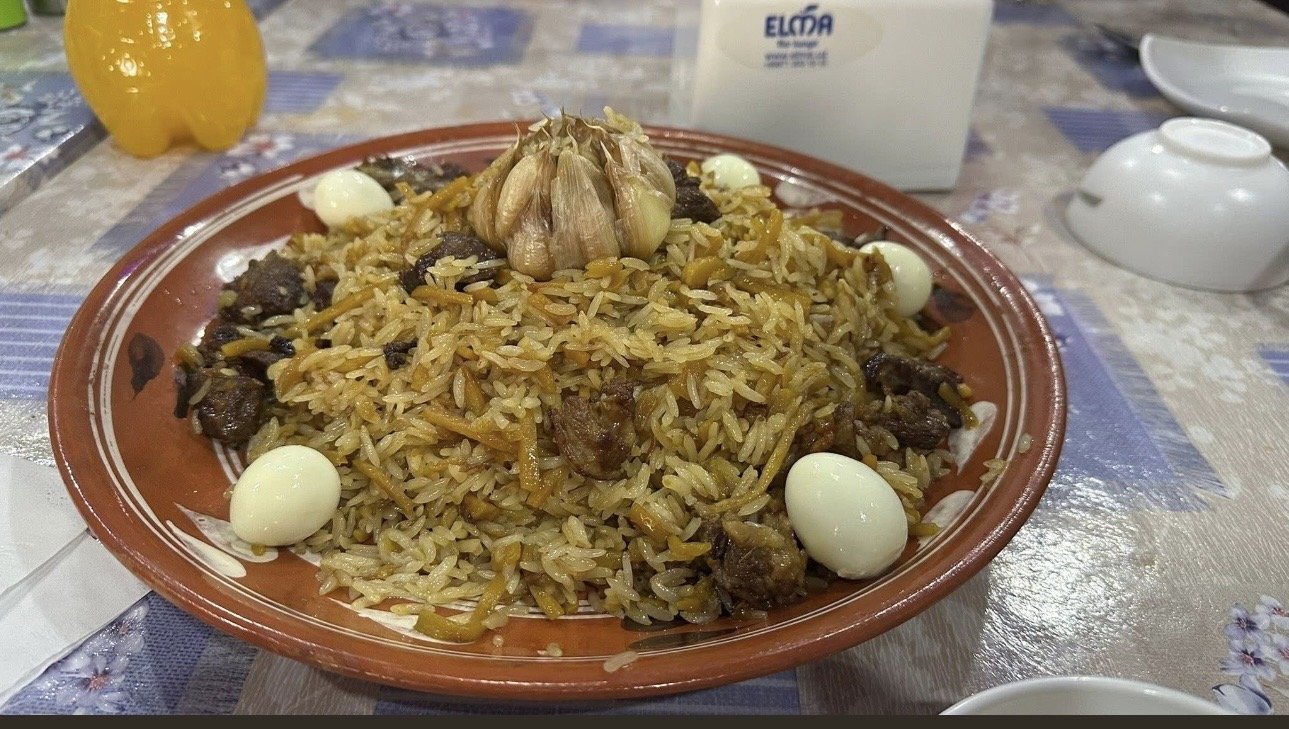 Image 18 of 19
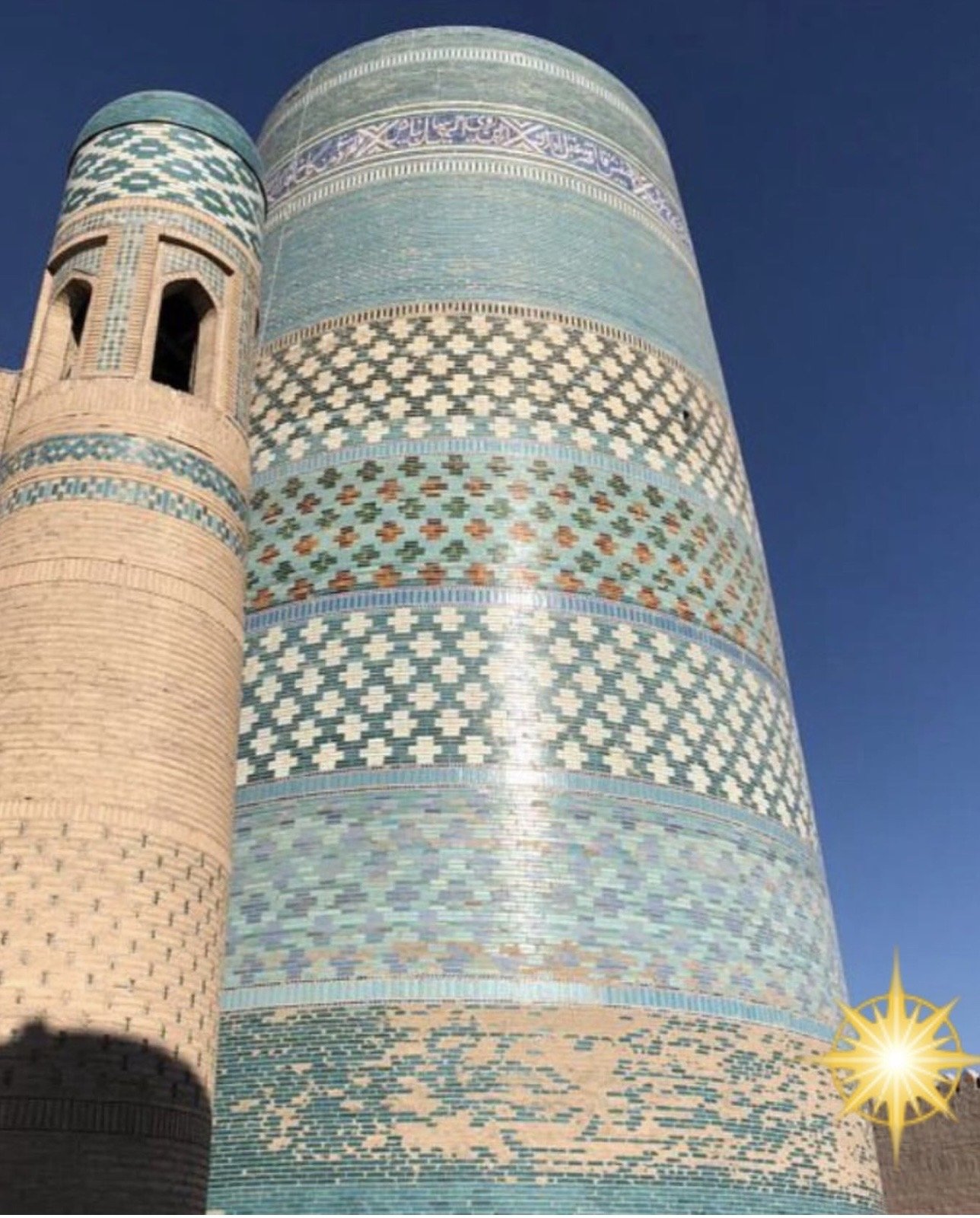 Image 19 of 19
UPCOMING TOUR DATES
Click ‘Enquire’ below - to receive a detailed itinerary and pricing,
Click ‘Book Now’ below - to secure your place on this tour.
Looking for a different date? Contact us to arrange another departure date.
-
Destination: UZBEKISTAN: Tashkent |Ferghana (Margilan) (Andijan) (Rishtan) (Kokand) | Tashkent | (Nukus) | Khiva | Bukhara | (Shakhrisabz) | Samarkand (Urgut) | Tashkent
Tour Commences In: Tashkent
Tour Concludes In: Tashkent
Number of Days: 16 days / 15 Nights
Tour Style: Private Small Group Tour (groups, couples & solo travellers)
Accommodation: Boutique Hotels
Meals: Breakfasts; 15: Lunches; 14: Dinners; 11:
Leaders: Professional textile & ceramic guide
Transportation: Private chauffeur driven air-conditioned vehicles & train
Tour Grading: MODERATE: Suitable for travellers with an average level of fitness and mobility
-
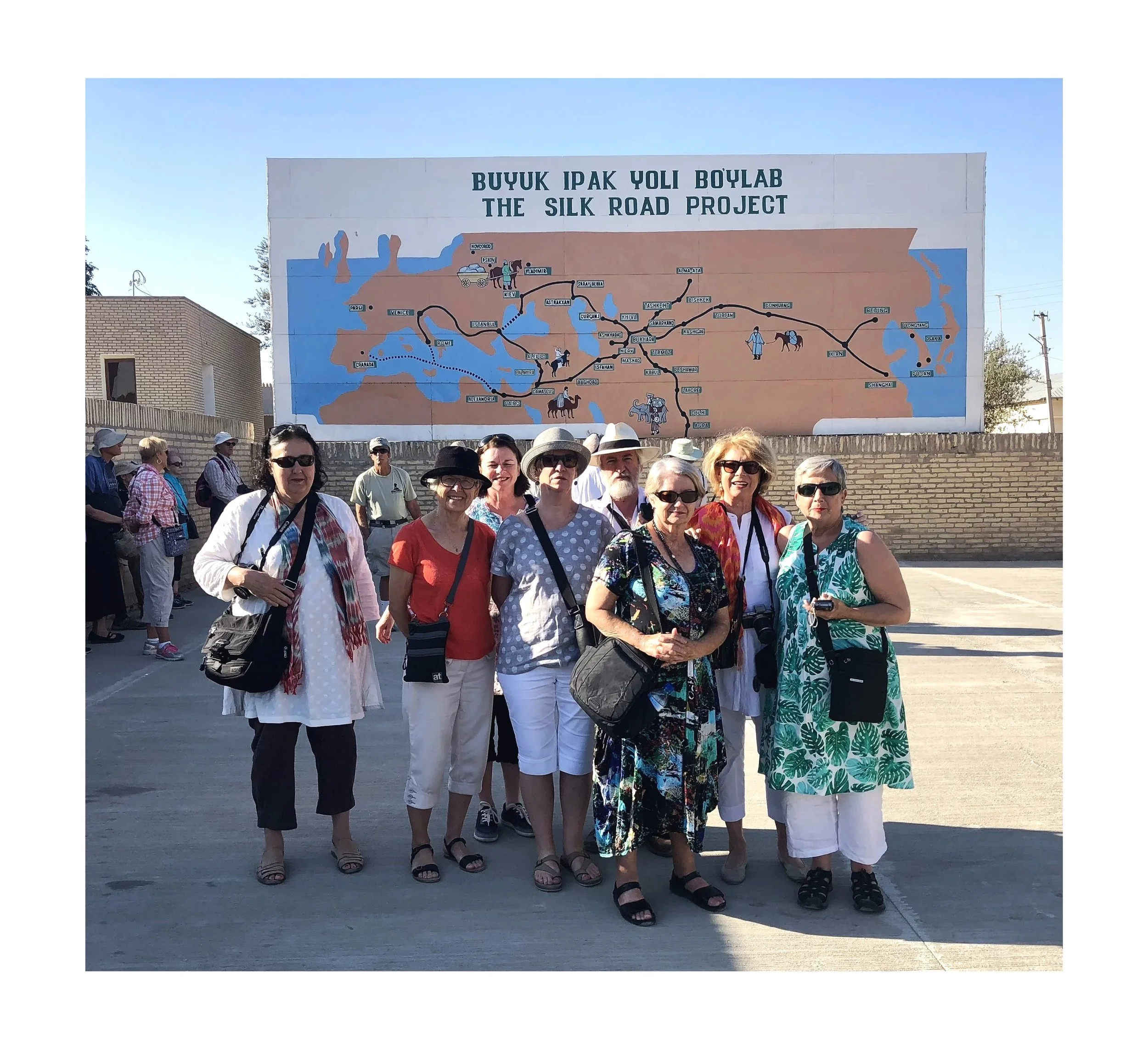
• Be fascinated by the history of the Silk Road as we trace the origins of contemporary Central Asian arts and crafts from millennia of trade through its great mercantile cities
• Be overwhelmed when you visit Tashkent’s Applied Arts Museum
• We get meet local potters, weavers, embroiderers and rug makers at their private workshops,
• Visit the Wood-Carving Centre in Kokand
• Experience Yodgorlik silk weaving factory, that uses only natural dyes
• Visit a workshop of a hand block printer
• Enjoy time-out at Margilan’s Thursday Bazaar
• Visit the houses of a master potters in Rishtan
• Enjoy the lovely old city of Khiva, with its majestic walls, palaces, mosques, tombs and high Central Asian minarets
• Marvel at carpet workshops where they are still using traditional methods
• Study a millennium of Central Asian architecture in Bukhara, beginning with the Samanid Mausoleum,
• Wander through the bazaars of Bukhara, feasting your eyes upon a rich variety of traditional arts and crafts,
• Discover a traditional gold embroidery workshop & silk fabric making in and around Bukhara
• Be impressed by the old Bukhara textiles in Akbar’s House & buy the best local Suzani’s (hand embroidery)
• Discover & shop the Sunday Market at Urgut with its famous textile, jewellery & garments.
• Be in awe of Samarkand’s magnificent Registan and its Madrassah’s with some of the worlds best tile work
• Shop & explore the local artisan centres in Tashkent’s restored madrassah’s
• Enjoy wonderful cuisine and regional delicacies
-
Day 1: Saturday: Arrive Tashkent: (D)
Welcome to Uzbekistan! You will be met by your driver and transferred to your hotel. Depending on your arrival time, you may have free time to explore Tashkent.
Guests participating in this tour are invited to rendezvous in the Hotel lobby early this afternoon for a tour briefing before departing on a brief tour visiting historical sites then continue on to our ‘Welcome Dinner’.
We will visit the “The Monument of Courage” dedicated to the city of Tashkent which suffered an earthquake which took place on April 26, 1966. Mustakillik Square (Independence Square) is the main and most beautiful square of the Tashkent. The entrance to the square opens with Arch of ‘good and noble aspirations’.
Amir Temur Square is the main square in town and use to contain a statue of Karl Marx, but he has been replaced by a statue of Uzbekistan’s 14thcentury national hero, Temur, on horse-back.
We then visit the amazing Applied Arts Museum in the old quarter which has a fantastic collection of Uzbek workmanship and a gallery that includes some of the finest ceramics in the country.
We also have an opportunity to travel the Tashkent underground a view some of the magnificent stations. Wethen continue onto our ‘Welcome Dinner’.You may wish to arrive a day earlier to get your bearings and recover from any jet lag you may have. If you do choose to arrive early, we can extend your hotel bookings and provide any information or advice you may need.
Tashkent is one of the oldest cities in Central Asia. In the Middle Ages, Tashkent near the foothills of the Tien Shan Mountains stood at the crossroads of the caravan routes from Europe to Asia, and from Siberia, China and India to the Middle East and Europe. Although it is more than 2,000 years old, many of Tashkent’s ancient monuments were destroyed by conquerors, time and by the earthquake of 1966. But today the city is lovelier than ever. Parks and gardens occupy almost one third of its area. It is the cosmopolitan town of free lined streets, shops, bridges and elegant parklands. Together with Tashkent’s architecture, which combines modern forms with traditional ornaments, Tashkent is a delightful city.
Day 2: Sunday: Tashkent – Kokand – Rishton Ferghana: (B/L/D)
We depart early to drive to Ferghana Valley. We will travel by car through the mountainous Kamcik Pass which occasionally has poor road conditions. Ferghana city is the administrative centre of Ferghana Region and an important industrial centre of Uzbekistan.
We stop in the ancient city of Kokand, centre of the Khanate of Kokand. The Khudoyar-Khan Palace & Museum. Raised to the level of fine art by Uzbek masters is wood-carving; apparently it has no match in the world. Covered with intricate engraved patterns, there are wall panels, caskets and boxes, the little national table khantaxta with hexahedral or octahedral top made of walnut, beech or plane trees, and the fascinating laukh (a stand for the Koran).
In Kokand we also visit Madrassah Jami, a centre with a myriad of workshops; observe the workers delicately crafting their craft. Lunch is at local restaurant in Kokand.
After lunch we proceed to Rishton. We visit a studio and watch as skilled craftsmen make and decorate the plates, bowls, pitchers, etc. We visit another family studio and observe skilled craftsmen make wool carpets. Watch or even participate in this fine fingered art. We continue our drive to Fergana. Arrival and accommodation at hotel. Dinner is at our hotel.Day 3: Monday: Ferghana – Margilan – Ferghana: (B/L/D)
After breakfast we drive to Margilan. Our first stop will be fascinating Thursday Bazaar where you can mingle with the locals. Then later it’s onto the famous Yodgarlik Silk factory and silk IKAT Weaving Centre and observe young apprentices make the beautiful bold patterned silk ikat that this region if known for. Original handmade methods of silk production have remained. Everything is done in the traditional manner. The weavers from Margilan make semi-silk adras, plain silk shoi, and famous worldwide khan-atlas: blazing with all the colours of rainbow, or exquisite black and white pattern with shining veins of blue or green silk fabric manufactured here is considered as one of the best in Central Asia. We stop for a special morning tea or lunch depending on the time.
We then visit our first Margilan Craft Centre, a new centre followed by a visit to another craft centre that is supported by UNESCO and housed in a historic Madrassah. Of special interest here is the velvet ikat weaving workshop, famous for supplying fabrics to Oscar de La Renta.
After we visit a hand weaver’s workshop where they work with natural (and some chemical) dyes to produce the traditional colours. We later return to our hotel.Day 4: Tuesday: Ferghana – Ahsikent – Chust – Tashkent: (B/L)
After checking out of the hotel we drive to Chust, famous for its skull caps where we visit a master skull cap maker’s home.
On the way we stop at the right bank of Syrdarya river (formerly the Jaxartes). Take in the panoramic view of the ruins of mediaeval Ahsikent city. Parts of the ancient, underground water collection system kyariz (developed in Persia) still remain.
After lunch we return to Tashkent. This evening is free for you to prepare for our early start in the morning.Day 5: Wednesday: Tashkent – Nukus - Khiva: (B/L/D)
This morning we have a very early start as we leave our hotel at dawn and are transferred to the airport for our flight to Nukus. On arrival we will drive to the amazing Nukus Museum, also known as the The State Art Museum of the Republic of Karakalpakstan State Museum that holds the famous Savitsky Art Collection.
Later we drive towards Khiva and on the way we stop at a local small embroidery centre before continuing driving onto the fabled city of Khiva This old city is listed as a UNESCO World Heritage Site.
As legend has it, this place has a history that dates back to the time of Shem, son of Noah. A settlement was certainly established here by the 8th century AD and began to flourish in the early 16th century. A colourful procession of conquering khans, Silk Road traders, Great Game spies and Russian invaders has long captured the imagination of writers and poets. It is also a photographer's delight, particularly in the evenings when the sun begins to set. This beautifully-preserved town is perfect for exploring on foot, with impressive walls that mark the boundaries of the old city.
Upon entering through its gates, we are greeted by towering minarets and numerous madrassas. Our guide takes us through many of these monuments including the Kalta Minor Minaret and Mohammed Rakhim Khan Madrassah, the 17th century Juma Mosque, the Islom-Hoja Minaret and Madrassah (built in 1908 and the highest structure in Khiva), the Kuhna Ark, which was the main fortress, the Pahlavon Mahmud Mausoleum complex (the Persian-style resting place of Khiva’s patron saint) and Toza Bog Palace, which between 1893-1913 was the summer palace of Mohammed Rakhim Khan II. Dinner this evening is under the stars.Day 6: Thursday: Khiva: (B/L)
Today we continue to explore one of the oldest cities from the second century AD of the great silk route cities, Khiva, visiting more historical monuments. This afternoon is at your leisure.Day 7: Friday: Khiva – Bukhara: (B/L/D)
This morning, we leave Khiva and transfer to the railway station and travel on the high speed electric Manguberdi train to Bukhara. (About 2.5 – 3 hours) Offering a comfortable journey through the Kyzyl-Kum (Red Sands Desert), the largest desert area in central Asia and inhabited by various nomadic people. We also cross the Amu Darya River, which was once known as the Oxus. This river bubbles up far to the south-east in the Pamirs and then runs west through the area now bordering modern Afghanistan - once famous throughout the ancient world for its lapis-lazuli mines. Curling slowly northward the river bisects the Kyzyl-Kum and Kara-Kum (Black Sands Desert), before stretching toward the southern tip of the shrinking Aral Sea. It was the Greeks who named this area ‘Transoxiana’ – literally ‘beyond the river’ – a name that echoes through the ages in literature and poetry and also in the imagination of travellers.
With the impressive sights of Bukhara and Samarkand ahead of us, this journey is an ideal opportunity to reflect on the journey so far, or catch up on some reading, or simply sit back and imagine you are a trader - relieved to have made it safely through the desert!
We arrive in the holy city of Bukhara and enjoy a free moment to absorb its ambience. Trading domes near here still offer an intriguing and colourful array of goods including embroideries, jewellery, spices, handicrafts and all manner of Silk Road treasures. This is the place to test your haggling skills, as well as share a joke or two with friendly local merchants. This is truly a magical place and it is sure to cast its spell on us too!A UNESCO World Heritage-listed site, Bukhara is widely regarded as Central Asia’s holiest city. With many monuments dating from the 8th to the 18th century AD, there is a vast span of history and architecture to uncover and the meticulous restoration of many of the mosaic and majolica decorations give us a true sense of how these buildings looked in their original glory.
We’ll have lunch at a local restaurant before beginning our exploration of Bukhara.
With more than one hundred officially preserved monuments, there is a lot to see and we have an extensive sightseeing program here spread over three days to make the most of our time here. Bukhara preserved its treasures of architecture of the pre-Mongol period. Thus, often the City of Bukhara is considered as a Museum in itself. The majority of sights lie scattered around the old city, ‘Shakhristanand’ and are most easily reached on foot. We continue our exploration of Bukhara and also see a rich collection of local embroidery of Suzanne, carpets and other workshops.
We continue our exploration of Bukhara and also see a rich collection of local embroidery of Suzanne, carpets and other workshops. Lunch at the private home of one of the best suzani maker in Bukhara.Complex "Poi Kalon" ("Beneath the Great"): "Kalyan Minaret" - the main symbol of sacred Bukhara that symbolized authority and power of spiritual governors. (12th c), "Kalyan Mosque"- its area of 130x80 m surpasses Bibi-Khanym mosque in Samarkand, "Miri Arab Madrassah" - active madrassah is one of the most esteemed spiritual Islamic universities (16th c), "Taki Zargaron" - the dome of jewelers (15-16th cc), "Ulugbeg Madrassah" - one of the 3 madrassahs constructed by grandson of Tamerlan - Ulugbeg (15th c), "Abdulaziz-khan Madrassah" - a traditional madrassah with 2 floors of hudjras and a mosque on the central axis ( mid. of 17th c), “Tim of Abdullah-Khan madrassah” (1588-1590), atlas shops, "Magoki-Attari Mosque" - the most ancient mosque in Bukhara (12th c) is considered a masterpiece of Bukhara architecture, "Khanaka and madrassah of Nadir Divan-Beghi" - a massive rectangular structure that was a place for the refuge and meditation of Sufis (17th c), "Kukeldash Madrassah" (16th c) - one of the biggest Bukhara madrassah, "Lyabi-Hauz" ensemble - the largest artificial reservoir of medieval Bukhara - is very popular among tourists (14-17th cc)
Visit of Telpak Furushon trade dome in Bukhara with a market of hats and spices.
We will also see rich collections of local embroidery, Suzanne, carpets and other workshops.
Dinner this evening at a local restaurant with a wonderful panoramic view.Day 8: Saturday: Bukhara: B/L/D)
This morning commences with a visit the amazing Mausoleum of the Samanids, the most ancient brick building in Central Asia; a masterpiece of world architecture. We continue onto The Ark, a massive fortress located in Bukhara. It was initially built and occupied around 5th century AD and is the only monument of Medieval Bukhara. This afternoon is at your leisure.
Dinner this evening is at an ancient madrassah with fashion show.Day 9: Sunday: Bukhara – Gijdivan – Bukhara: (B/L)
After breakfast we visit a gold embroidery studio. Try your hand here too, they will be delighted to assist you.
Then drive to Gijduvan and visit a ceramic workshop, observing workers in their specialty of this art; turning the wheel, painting, glazing etc. We may also observe the women embroidering their Suzani’s. You are welcome to participate. This will be followed by lunch. We then return to Bukhara and this afternoon is at your leisure.Day 10: Monday: Bukhara – Samarkand: (B/L/D)
This morning we shall drive to Bukhara's city limits to visit Sitora-i-Mokhi Khosa Palace; the Summer Palace, residence of the Former Emir of Bukhara. It is reputed to be the oldest mosque in central Asia. Sitorai Moki Khosa means Star and Garnet Garden and was the summer palace of the last emir. Its opulence is also reflected by its combination of local and European influences in its designs and furnishings. The halls are richly decorated with carpets and paintings. In the residence there is a rare collection of Suzani on display.
We return to the city and visit the Chor-Minor. It is a unique structure with four minarets – one on each corner. It was built in 1807 by Turkmen merchant, Khalif Niyazkul.
We later transfer to the railway station.
Departure to Samarkand by high-speed train ‘Afrosiab’ 15:52hrs -17:25hrs (time is subject to be changed)
On arrival to Samarkand transfer to your hotelSamarkand is perhaps the most well-known of Silk Road towns, we will enjoy a couple of days of sightseeing and exploration of Samarkand, a city that evokes the romance of the Silk Road perhaps more than any other. From its foundation in the 5th century BC, this crossroads of cultures, religions, peoples and languages has been a centre of artisans and traders as well as the prize for many a conquering army. Alexander the Great stormed its walls in 329 BC and many other rulers chose to make it their capital in the centuries that followed including Genghis Khan and Tamerlane. Even the Soviet occupiers declared it the original capital of the Uzbek SSR in 1924, although it only kept that honour for four years!
Day 11: Tuesday: Samarkand: (B/L/D)
This morning we begin with a visit the Gur Amir Mausoleum, the final resting place of the mighty Temur and his sons and grandsons. For a man of his stature, it is quite a simple tomb. One highlight of our trip will certainly be standing on the iconic Registan Square with the three madrassah’s (Ulugbek, Sher Dor and Tilla-Kari) towering over us.
Close to the Registan is the Bibi-Khanym Mosque built by Temur and often compared to the Taj Mahal, as it was built as a grand and timeless symbol of a man's love for his wife. This mosque overlooks the busy and colourful Siob Bazaar, where photographers will delight in taking photos of the many bustling stalls and huge array of produce, as well as encounter friendly greetings from the local traders.
Our next stop is the Shah-i-Zinda Mausoleum complex. Also known as the ‘Town of the Dead’ this is a row of
more than 20 mausoleums, some of them with stunningly colourful tile work.Day 12: Wednesday: Samarkand - Shakhrisabz - Samarkand: (B/L/D)
After breakfast we embark on a scenic drive to Shakhrisabz over the beautiful mountain pass Takhta Karacha. (in cars)
Shakhrisabz holds the distinction of being the birthplace of the great commander Emir Temur. Also known as Tamerlane.
We tour the sites that are very much part of the life of Temur. We explore Tamerlane’s Ak-Sarai Palace, pay homage at his planned Mausoleum, and visit the magnificent Kuk Gumbaz Mosque. Shakhrisabz is also famous for beautiful Suzani embroidery.
Lunch today is in the house of local habitants.
We later return to Samarkand via a textile ‘workshop’ that makes beautiful silk and cotton garments which you are able to purchase. Dinner this evening is at the local restaurant.Day 13: Thursday: Samarkand – Urgut – Samarkand: (B/L/D)
We are off to one of the largest Markets this morning in the village of Urgut. It claims to be one of the oldest markets in Uzbekistan. Here you have a good chance to see folks from all over the countryside selling their products – animals, daily usage and embroideries. This is an exciting old market where one can find antique textiles, new textiles, garments, hats, traditional shoes, jewellery, beads, etc. This is a busy place where lots of locals come to do their regular market shopping.
After visiting the Urgut market we return to Samarkand via Khoni Ghil village to observe the production of special Samarkand hand-made paper. This is a UNESCO project has involved the restoration of an old water mill in which an ancient art is now practiced.
After lunch we visit the local bazaar with ceramics and textiles and a Carpet Factory.
We also visit a textile workshop. In the workshop travellers have an opportunity to witness all the stages of natural silk production and purchase some beautiful garments.Day 14: Friday: Samarkand – Tashkent: (B/L)
This morning we continue our discovery of Samarkand. Visit the Mausoleum Daniyar - the place that is still not solved, where three religions interweave. There are many versions of the appearance of the tomb, but to this day it is not known exactly who veils tomb, whether is buried there someone or not and what is the reason of its unusual, elongated size.
We visit Ulughbek’s Observatory - one of the important observatories in the world of the middle ages, built by Ulugbek near Samarkand in 1428-1429. It is round three-story building, its diameter is 46,4 and height is 30 metre. There was marble sextant here. The device which was under the ground is well preserved. The arc of the instrument is made of marble with two barriers. In Ulugbek Observatory worked such outstanding astronomers as al-Kushchi, Kazi-zade ar-Rumi.
Visit the Mausoleum Daniyar - the place that is still not solved, where three religions interweave. There are many versions of the appearance of the tomb, but to this day it is not known exactly who veils tomb, whether is buried there someone or not and what is the reason of its unusual, elongated size.
Later we will have late lunch before catching the late afternoon high speed train to Tashkent. (Approx. 1730Hrs)
Dinner is on your own this evening..Day 15: Saturday: Tashkent: (B/L/D)
After breakfast, we continue our exploration of Tashkent. We visit the new impressive Center of Islamic Civilization — one of the most ambitious cultural, scientific, and educational complexes in Central Asia, dedicated to the contributions of scholars from the region to Islamic civilization and world heritage.
The center houses a large museum, research institute, libraries, restoration and digitization laboratories, international departments, and educational facilities for calligraphy, languages, and traditional arts.
Inside, expansive exhibition halls spanning more than 15,000 m² present thematic galleries that guide visitors through human history — from pre-Islamic civilizations, through the Golden Age of Islam and Timurid Renaissance, to the modern era of “New Uzbekistan.” These exhibits feature rare manuscripts, historical artifacts, archaeological finds, decorative and applied art, and multimedia presentations. At the heart of the museum is one of the oldest and most revered manuscripts in the Islamic world — the Quran of Uthman — alongside other Qur’ans and texts from different eras, highlighting the development of calligraphy, scholarship, and spiritual culture.
Located adjacent to the historic Hazrati Imam complex — a major religious and cultural hub in Tashkent — the Center of Islamic Civilization forms an integral part of a broader cultural and spiritual landscape where history, faith, and scholarship meet.
Visit the historical green dome of Chorsu Bazaar, a farmers market that is one of the largest and oldest in central Asia.
It is also a great place to buy Uzbek souvenirs including the ubiquitous skull caps. On a hill behind the bazaar is the 16th centuryKulkedash Madrassah – an Islamic school that sits beside the 15th century Juma (Friday) Mosque (external visit).
Visit to the peaceful historical site of Suzuk Ota Mausoleum. This 16th –19th century complex is an important spiritual and architectural monument, reflecting traditional Central Asian craftsmanship and local religious heritage.
A short walk to the nearby fabulous artisan workshop textile and traditional crafts workshop. Meet the artisan and explore contemporary interpretations of Uzbek traditional crafts. You will see handwork techniques, materials, and finished pieces inspired by national heritage. Optional opportunity for purchase or small private demonstration depending on availability.
If time permits, we visit an art gallery Human House that features hand-made crafts and clothing, ranging from full outfits to purses to beautiful hand-painted tea sets and ceramics and all made in original national style.Day 16: Sunday : Depart Tashkent: (B)
Our small group tour concludes after breakfast and for most guests today it is time to say farewell to acquaintances, new-found friends and Uzbekistan.At your leisure before transferring to the airport for your onward or homebound journey.
Depending on your departure itinerary, you may have time for some last-minute sightseeing and shopping. We are able to organise our private guide to accompany you.
Some guests may wish to stay another day; please don’t hesitate to contact Boutique Tours & Travel for further travel arrangements.
Our itineraries are carefully planned to ensure you are rewarded with the best experiences in Uzbekistan. The magic of travelling in a small group allows us to cater for spontaneity and it is sometimes these unplanned moments that can be the most memorable and together with the rich tapestry of experiences and the characters we meet along the way that make this a very special tour.
Please Contact Us as soon as possible to ensure your place on this boutique small group tour.
-
A specially curated itinerary for Boutique Tours & Travel
A Small Group Tour (2 - 12 Guests)
Private international airport arrival and departure transfers for all guests
Domestic Economy Class Flight – Tashkent / Khiva
Local trains for domestic transfers as per itinerary
Hand selected modern & boutique hotel accommodation
Meals as indicated in Itinerary; B = Breakfast: L=Lunch: D=Dinner:
Internet Access where possible
Private services of local bilingual textile tour guide
Concierge / Bellhop services throughout tour - 24 hour on call support service
Luxury private Chauffeur driven luxury air- conditioned vehicles for transfers & sightseeing
Admission fees to all monuments, activities, excursions and shows as per the itinerary
An exclusive BT&T Travel Information App
Bottled water whilst touring in vehicle
Room Sharing option for single/solo travellers available
Not included:
International and or Domestic air fares
Arrival / Departure Taxes, levies and other charges
Passport and visa fees
Excess baggage charges
Cost of any ‘luggage delivery’ via FedEx or postal services
Personal travel insurance
Porterage, tipping and gratuities
Meals not included & some alcoholic beverages not included
Personal expenses
FAQs for
-
Yes. Our Uzbekistan small group tours are particularly suited to mature travellers who appreciate comfort, culture and authentic experiences without travelling in a large tour group.
We keep our groups small, allowing for a more relaxed pace and more personal experiences. Our tours generally have 2 to 12 guests, creating a friendly atmosphere while still providing the benefits of a professionally organised tour. -
Uzbekistan is generally considered a welcoming destination for international visitors, including Australian travellers.
As with any international journey, we recommend checking the latest Australian Government Smartraveller advice for Uzbekistan before departure and following normal travel precautions.
We work closely with our agent and have confidence in thei local knowledge of situations. -
Spring and autumn are generally excellent times to travel to Uzbekistan, when temperatures are more comfortable for sightseeing.
Spring offers pleasant weather and colourful landscapes, while autumn brings comfortable sightseeing conditions and seasonal produce in the markets.
Summer isvery hot, particularly in some inland areas, while winter is colder but can offer a quieter experience.
We recommend choosing your travel dates according to your interests, preferred climate and itinerary.
Interested in this tour?
Get in touch to request more information or discuss the tour
Contact Details:
T: 1300 429 200
M: (+61) (0) 411 116 925
Office Hours:
Monday to Friday: 9:30am to 5:00pm
Address:
P.O. Box 1414, Central Park VIC 3145, Australia